Showing posts with label health. Show all posts

Thursday, December 06, 2012

Affordable Care Act Saves Consumers $1.5 Billion


Consumers saw nearly $1.5 billion in insurer rebates and overhead cost savings in 2011, due to the Affordable Care Act’s medical loss ratio provision requiring health insurers to spend at least 80 percent of premium dollars on health care or quality improvement activities or pay a rebate to their customers, according to a new Commonwealth Fund report.

Consumers with individual policies saw substantially reduced premiums when insurers reduced both administrative costs and profits to meet the new standards. While insurers in the small- and large-group markets achieved lower administrative costs, not all of these savings were passed on to employers and consumers, as many insurers increased profits in these markets.

Monday, November 12, 2012

Pepsi Introduces Fat Blocking Soda


All American Investor

Source: abcnews.go.com via Bob on Pinterest


Continue reading - Pepsi Introduces Fat Blocking Soda

Sunday, April 08, 2012

Lilly (LLY) Alzheimer's Test Approved by FDA


A much-anticipated test developed by Eli Lilly, LLY , that detects the presence of proteins in the brain that are related to Alzheimer's disease was approved Friday by the Food and Drug Administration.

The tool could enable clinicians to detect Alzheimer's earlier and more accurately in patients at the earliest sign of memory problems—a potential boon to treatment and developing drugs against the disease.

The test uses a chemical called florbetapir, known by the brand name Amyvid, which is a radioactive agent that tags clumps of a sticky substance called an amyloid. Amyloid proteins are hallmarks of Alzheimer's disease. The chemical, which costs $1,600 per dose, then is detected using a brain imaging technique called positron emission tomography, known as PET scans.
Read More

Read More about Alzheimer's in the Alzheimer's Reading Room

Friday, February 10, 2012

Cancer Drug Erases Alzheimer's Symptoms in Days


Neuroscientists at Case Western Reserve University School of Medicine have made a dramatic breakthrough in their efforts to find a cure for Alzheimer’s disease. The drug in question, Bexarotene has been approved for the treatment of cancer by the U.S. Food and Drug Administration for more than a decade.

Alzheimer's Reading Room 

Gary Landreth
In the study described below, the cancer drug Bexarotene quickly and dramatically improved brain function and social ability and restored the sense of smell in mice bred with a form of Alzheimer's disease. 

Imagine this.

Within hours of taking the drug, amyloid plaques began to clear out of the mice’s brains. After three days, more than 50 percent of the Alzheimer’s plaques had disappeared, and the mice regained some of the cognitive and memory functions typically lost in Alzheimer's disease.

Wednesday, January 18, 2012

Johnson & Johnson (JNJ) 2012 Review


Johnson & Johnson (JNJ) is a major developer, manufacturer and marketer of health care products. 

Its major divisions are: Consumer (baby care, oral care, non-prescription drugs, wound care and skin care), Medical Devices (electrophysiology, circulatory disease management and orthopedic joint reconstruction) and Pharmaceuticals (contraceptives, psychiatric, anti-infective, gastrointestinal and dermatological).

Over the past ten years, the company has earned a 20-30% return on equity while growing its earnings and dividend at a 12-14% annual rate. While profit and dividend growth may slow somewhat short term, its strong, well diversified product line should continue to grow rapidly longer term as a result of:


Sunday, January 17, 2010

Antipsychotics, Johnson and Johnson, Kickbacks to Nursing Homes, the Feds Step In


UNITED STATES FILES SUIT AGAINST DRUG MANUFACTURER JOHNSON & JOHNSON (JNJ) FOR PAYING KICKBACKS TO NATION’S LARGEST NURSING HOME PHARMACY
By Bob DeMarco
...for paying millions of dollars in kickbacks to Omnicare, Inc. (“Omnicare”), the nation’s largest pharmacy that specializes in dispensing drugs to nursing home patients.

U.S. Attorney Carmen Ortiz said, “Kickbacks in the nursing home pharmacy context are particularly nefarious because they can result in excessive prescribing of strong drugs to patients who have little or no control over the medical care they are receiving. Nursing home doctors should be able to rely on the integrity of the recommendations they receive from pharmacists, and those recommendations should not be a product of money that a drug company is paying to the pharmacy.”
This lawsuit and story pertains to the enormous amount of antipsychotics that are being given to nursing home patients.

In this case, Risperdal, like many other psychotics, raises the risk of death in patients with psychosis that stems from dementia. Risperdal is not approved to treat this form of psychosis. Nevertheless, the drugs have been widely prescribed to nursing-home patients with dementia.

The Wall Street Journal broke this story back in 2007 -- Antipsychotic Drugs Abused as Chemical Restraints for Elderly. The article pointed out that "almost a third of patients in nursing homes were receiving powerful antipsychotic drugs". They were being given the drugs whether the patients were psychotic -- or not.

United States files suit against drug manufacturer Johnson and Johnson for paying Kickbacks to Nation's Largest Nursing Home Pharmacy

BOSTON, MA - United States Attorney Carmen M. Ortiz and Tony West, Assistant Attorney General for the Justice Department’s Civil Division, announced today that the Government has filed a civil False Claims Act complaint against drug manufacturer Johnson & Johnson (J&J), of New Brunswick, New Jersey, and two of its subsidiaries, Ortho-McNeil-Janssen Pharmaceuticals, Inc., and Johnson & Johnson Health Care Systems, Inc., for paying millions of dollars in kickbacks to Omnicare, Inc. (“Omnicare”), the nation’s largest pharmacy that specializes in dispensing drugs to nursing home patients. In November 2009, the United States, numerous states, and Omnicare entered into a $98 million settlement agreement that, among other things, resolved Omnicare’s civil liability under the False Claims Act for taking kickbacks from J&J.

U.S. Attorney Carmen Ortiz said, “Kickbacks in the nursing home pharmacy context are particularly nefarious because they can result in excessive prescribing of strong drugs to patients who have little or no control over the medical care they are receiving. Nursing home doctors should be able to rely on the integrity of the recommendations they receive from pharmacists, and those recommendations should not be a product of money that a drug company is paying to the pharmacy.”

“We will pursue those who break the law to take advantage of the elderly and the poor,” said Tony West, Assistant Attorney General for the Civil Division of the Department of Justice.“ Kickbacks such as those alleged here distort the judgments of health care professionals and put profits ahead of sound medical treatment.”

In its complaint against J&J, the United States alleges that J&J paid kickbacks to Omnicare to induce Omnicare to purchase and to recommend J&J drugs, including the antipsychotic drug Risperdal, for use in nursing homes. According to the complaint, J&J understood that Omnicare’s pharmacists reviewed nursing home patients’ charts at least monthly and made recommendations to physicians on what drugs should be prescribed for those patients. The Government further alleges that J&J knew that physicians accepted the Omnicare pharmacists’ recommendations more than 80 percent of the time, and that J&J viewed such pharmacists as an “extension of [J&J’s] sales force.”

The United States alleges that, in order to induce Omnicare and its pharmacists to recommend J&J drugs, J&J paid kickbacks to Omnicare in numerous ways. First, the complaint alleges that J&J entered into agreements with Omnicare pursuant to which Omnicare was entitled to increasing levels of rebates from J&J so long as Omnicare implemented specific “Active Intervention Programs” to drive prescribing of J&J drugs. Second, the complaint alleges that J&J paid Omnicare millions of dollars for “data,” much of which Omnicare never provided. According to the complaint, the true purpose of these payments was to induce Omnicare to recommend J&J drugs, and J&J used the disguise of a data purchase arrangement to evade its obligations to disclose the payments to the Government and to pay rebates to state Medicaid programs. Third, the complaint alleges that J&J made various other substantial kickback payments to Omnicare, calling the payments “grants” and “educational funding” even though their true purpose was to induce to Omnicare to recommend J&J drugs.

In response to J&J’s kickbacks, according to the complaint, Omnicare undertook various “intervention” programs for J&J drugs. For example, Omnicare engaged in a “Risperdal Initiative” whose purpose, as J&J understood it, was “to persuade physicians to write Risperdal in the areas of Behavioral Disturbances associated with Dementia.” After the conduct at issue, the United States Food and Drug Administration mandated that the label for Risperdal carry a“black box” warning that “Elderly Patients with dementia-related psychosis treated with atypical antipsychotic drugs [including Risperdal] are at an increased risk of death compared to placebo.” The United States filed its complaint in two consolidated whistleblower lawsuits presently on file in the District of Massachusetts.

This case was investigated by the Chicago, St. Louis, and Boston units of the Office of Inspector General of the Department of Health and Human Services, the Chicago unit of the Food and Drug Administration Office of Criminal Investigations and the Federal Bureau of Investigation. The case is being handled by Gregg Shapiro and Christine Wichers in Ortiz’s Civil Division and Laurie Oberembt in the Justice Department’s Civil Division.

CONTACT: CHRISTINA DiIORIO-STERLING
PHONE: (617)748-3356
E-MAIL: USAMA.MEDIA@USDOJ.GOV


Original content Bob DeMarco, the Alzheimer's Reading Room

Thursday, January 07, 2010

Does Exposure to Cell Phones Reverse Alzheimer's Disease ?


Microwave radiation from cell phones may protect against and even reverse Alzheimer's-like symptoms, according to a new study involving genetically tweaked mice......
By Bob DeMarco


I know this will sound hard to believe but the study found that if cell phone exposure began before genetically engineered mice started showing signs of Alzheimer's, they were less likely to develop symptoms later on in life.

Additionally, the genetically engineered mice that were were exposed to the cell phone radiation after they had already begun to show cognitive deficits generally saw their memory impairment disappear after several months of the radiation exposure.

Go figure.

The millions of people who spend hours every day on a cell phone may have a new excuse for yakking. A surprising new study in mice provides the first evidence that long-term exposure to electromagnetic waves associated with cell phone use may actually protect against, and even reverse, Alzheimer's disease. The study, led by University of South Florida researchers at the Florida Alzheimer's Disease Research Center (ADRC), was published today in the Journal of Alzheimer's Disease.
To continue reading go here.

Popular articles on the Alzheimer's Reading Room


Bob DeMarco is the editor of the Alzheimer's Reading Room and an Alzheimer's caregiver. Bob has written more than 1,050 articles with more than 8,000 links on the Internet. Bob resides in Delray Beach, FL.


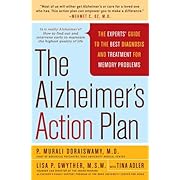
The Alzheimer's Action Plan: The Experts' Guide to the Best Diagnosis and Treatment for Memory Problems


Original content Bob DeMarco, Alzheimer's Reading Room


Thursday, June 04, 2009

THE ECONOMIC CASE FOR HEALTH CARE REFORM


THE ECONOMIC CASE FOR HEALTH CARE REFORM

EXECUTIVE SUMMARY

The Council of Economic Advisers (CEA) has undertaken a comprehensive analysis of the economic impacts of health care reform. The report provides an overview of current economic impacts of health care in the United States and a forecast of where we are headed in the absence of reform; an analysis of inefficiencies and market failures in the current health care system; a discussion of the key components of health care reform; and an analysis of the economic effects of slowing health care cost growth and expanding coverage. Read the full report.

The findings in the report point to large economic impacts of genuine health care reform:

  • We estimate that slowing the annual growth rate of health care costs by 1.5 percentage points would increase real gross domestic product (GDP), relative to the no-reform baseline, by over 2 percent in 2020 and nearly 8 percent in 2030.
  • For a typical family of four, this implies that income in 2020 would be approximately $2,600 higher than it would have been without reform (in 2009 dollars), and that in 2030 it would be almost $10,000 higher. Under more conservative estimates of the reduction in the growth rate of health care costs, the income gains are smaller, but still substantial.
  • Slowing the growth rate of health care costs will prevent disastrous increases in the Federal budget deficit.
  • Slowing cost growth would lower the unemployment rate consistent with steady inflation by approximately one-quarter of a percentage point for a number of years. The beneficial impact on employment in the short and medium run (relative to the no-reform baseline) is estimated to be approximately 500,000 each year that the effect is felt.
  • Expanding health insurance coverage to the uninsured would increase net economic well-being by roughly $100 billion a year, which is roughly two-thirds of a percent of GDP.
  • Reform would likely increase labor supply, remove unnecessary barriers to job mobility, and help to “level the playing field” between large and small businesses.
Subscribe to All American Investor via Email


Kindle: Amazon's Wireless Reading Device (Latest Generation)


Follow All American Investor on Twitter