Showing posts with label consumer. Show all posts

Wednesday, January 18, 2012

Johnson & Johnson (JNJ) 2012 Review


Johnson & Johnson (JNJ) is a major developer, manufacturer and marketer of health care products. 

Its major divisions are: Consumer (baby care, oral care, non-prescription drugs, wound care and skin care), Medical Devices (electrophysiology, circulatory disease management and orthopedic joint reconstruction) and Pharmaceuticals (contraceptives, psychiatric, anti-infective, gastrointestinal and dermatological).

Over the past ten years, the company has earned a 20-30% return on equity while growing its earnings and dividend at a 12-14% annual rate. While profit and dividend growth may slow somewhat short term, its strong, well diversified product line should continue to grow rapidly longer term as a result of:


Wednesday, May 19, 2010

CONSUMER PRICE INDEX –APRIL 2010


On a seasonally adjusted basis, the Consumer Price Index for All Urban Consumers (CPI-U) declined 0.1 percent in April, the U.S. Bureau of Labor Statistics reported today. Over the last 12 months, the index increased 2.2 percent before seasonal adjustment.

Wednesday, November 18, 2009

CONSUMER PRICE INDEX (Chart and Text) OCTOBER 2009


On a seasonally adjusted basis, the Consumer Price Index for All Urban Consumers (CPI-U) rose 0.3 percent in October, the U.S. Bureau of Labor Statistics reported today.

The index has decreased 0.2 percent over the last 12 months on a not seasonally adjusted basis.


Subscribe to All American Investor via Email


The seasonally adjusted all items increase largely reflected advances in the indexes for energy and for new and used motor vehicles. The energy index rose for the fifth time in the last six months, advancing 1.5 percent as the indexes for gasoline, fuel oil, natural gas, and electricity all increased.

The index for all items less food and energy rose 0.2 percent in October, the same increase as in September.

The indexes for used cars and trucks and for new vehicles both rose sharply and together they accounted for over 90 percent of the increase in the index for all items less food and energy.

The indexes for airline fares and medical care also increased, while the shelter index was unchanged and the indexes for apparel and recreation declined.

The food index also increased in October, rising 0.1 percent after declining in two of the previous three months. The index for food away from home increased slightly, while the food at home index was unchanged. Within the food at home group, the index for dairy and related products rose significantly, while the fruits and vegetables index declined for the fourth straight month.

Consumer Price Index Data for October 2009

Food

The food index rose 0.1 percent in October after declining 0.1 percent in September. The index for food away from home increased 0.1 percent while the food at home index was unchanged. Within the food at home group, the index for dairy and related products rose 1.0 percent in October after a 0.5 percent increase in September, and the index for other food at home advanced 0.3 percent. These increases were offset by a 0.7 percent decline in the fruits and vegetables index and 0.2 percent decreases in the indexes for meats, poultry, fish, and eggs and for nonalcoholic beverages. The index for cereals and bakery products was unchanged in October. Over the past 12 months, the food index has declined 0.6 percent with the food at home index down 2.8 percent.

Energy

The energy index rose 1.5 percent in October after increasing 0.6 percent in September. The index for energy commodities rose 1.9 percent, with the gasoline index increasing 1.6 percent. (Before seasonal adjustment, gasoline prices fell 0.8 percent in October.) The index for fuel oil rose 6.3 percent. The index for energy services, which increased 0.1 percent in September, rose 0.9 percent in October. The electricity index increased 0.6 percent while the index for natural gas rose 1.9 percent in October after declining 1.7 percent in September. Over the past 12 months, the energy index has fallen 14.0 percent with the gasoline index declining 17.9 percent.

All items less food and energy

The index for all items less food and energy rose 0.2 percent in October, the same increase as in September. Most of the advance was due to increases in transportation indexes. The new vehicles index rose 1.6 percent and the index for used cars and trucks rose 3.4 percent, its third consecutive substantial increase.

The index for airline fares rose for the fourth straight month, increasing 1.7 percent in October.

Outside of the transportation group, the changes within all items less food and energy were largely modest.

The medical care index rose 0.2 percent in October after increasing 0.4 percent in September.

The shelter index was unchanged in October, as it was in September. The rent index decreased 0.1
percent, the index for owners’ equivalent rent was unchanged, and the index for lodging away from home rose 0.4 percent.

Posting declines in October were the indexes for recreation and apparel, which both fell 0.4 percent. For the past 12 months, the index for all items less food and energy has risen 1.7
percent.

Kindle: Amazon's 6" Wireless Reading Device


Original content Bob DeMarco, All American Investor

Sunday, November 08, 2009

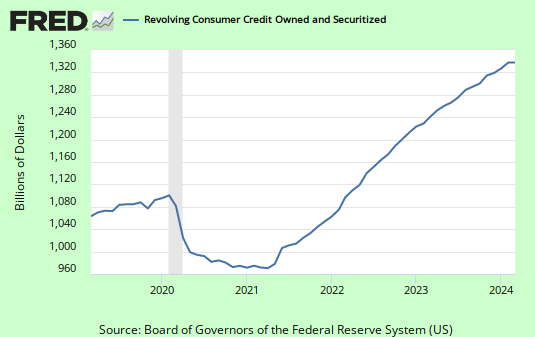
Consumer Credit -- Total Revolving Credit Outstanding (Graph)


Covers most short- and intermediate-term credit extended to individuals, excluding loans secured by real estate....


Subscribe to All American Investor via Email
Kindle: Amazon's 6" Wireless Reading Device

Wednesday, July 08, 2009

Roubini Still Concerned About the Economy


In conclusion, the outlook for the U.S. economy remains very weak. The recent rally in global equities, commodities and credit may soon fizzle out as worse-than-expected earnings and financial news take their toll on this rally, which has gotten ahead of improvements in actual macroeconomic data.

Source: RGE Monitor Newsletter
Subscribe to All American Investor via Email


Lingering Concerns:

Labor market conditions are still quite dire, more than 3.4 million jobs have been lost in 2009 and about 6.5 million have been lost since the beginning of the recession. Compare this with the 2.5 million jobs lost in the recession of 2001; 1.5 million lost in the recession of the early 1990s; 3 million in the one of the early 1980s; 2.2 million in the one of the 1970s.

The pace of job losses has fallen from the 600K plus per month registered between December and March 2009 to about 350K in May and 467K in June; the average monthly job losses in this recession is now at about 360K. While the recent slowing of losses is a positive development, we have to put this in perspective: in previous post-war recessions, average monthly job losses have ranged between 150 thousand and 260 thousand. Moreover, average weekly hours in private nonfarm payrolls are at the lowest since 1964, as employers have cut employees’ hours. Job openings and turnover openings continue to fall and are at the lowest levels since 2000, indicating continued weakness in the economy.

The U.S. consumer is still the engine of U.S. growth, and contributes to over 70% of aggregate demand. While saving rates are headed for the high single digits and high oil prices together with long-term rates keep putting a dent in personal consumption, the over-leveraged consumer is finding some support in the tax breaks of the fiscal stimulus package. Yet the over-indebted U.S. consumer – whose deleveraging process yet has to start – will likely continue to put the brakes on consumption, while the savings rate continues to creep up. While this will encourage a rebalancing in the U.S. and global economy, in the medium-term it isn’t likely to support strong U.S. and global growth.

Housing starts appear to have stabilized and will likely move sideways for quite some time. However, housing demand is not yet improving at a pace that can guarantee that the lingering inventory overhang will dissipate. This implies that home prices will continue to fall. RGE Monitor expects home prices to continue to fall through mid-2010.

U.S. industrial production has been contracting for 17 months in a row – with a short break in October 2008. Industrial production usually finds a bottom shortly after the ISM manufacturing index does. While the index probably found its bottom back in December 2008--at depression levels of 32.9--industrial production remains in a mode of contraction that started in January 2008.

Financial conditions are showing some improvement. Banks are borrowing at zero interest rates and higher net interest margin can definitely help rebuild capital. Regulatory forbearance, changes in FASB (Financial Accounting Standards Board) rules and under-provisioning might enable banks to post better than expected results for a few quarters. However, relaxation of mark-to-market rules reduces the banks’ incentives to participate in the Public-Private Investment Program (PPIP) and therefore reduces the likelihood that the program will succeed in clearing toxic assets from banks’ balance sheets. The muddle-through approach might be successful in a scenario in which the U.S. and global economy recover soon and go back to potential growth during 2010, but according to RGE’s forecasts, this is highly unlikely. While we might have positive surprises coming from the banking system in the next couple of quarters, the situation could turn around again after that, jarring confidence in financial markets in a way that would spill into the real economy. Increases in the unemployment rate, well beyond the rates envisioned by the adverse scenario of the recent bank stress tests, imply that recapitalization needs are larger than what the too-lenient stress test prescribed. The U.S financial system – in spite of the massive policy backstop – thus remains severely damaged, and the credit crunch remains unlikely to ease very fast.

A sharp rise in public debt burden – the U.S. Congressional Budget Office estimates that the public-debt-to-GDP ratio will rise from 40% to 80% (in the next decade), or about $9 trillion – will also put a dent on growth. If long-term rates were to increase to 5%, the resulting increase in the interest rate bill alone would be about $450 billion, or 3% of GDP. The implication is that the fiscal primary surplus will have to be permanently increased by 3% of GDP, which could constitute further pressure on the disposable income of the U.S. consumer.

Not only does the U.S. economy face downward risks to growth in the medium-term, but potential growth might fall as well. The U.S. population is aging. With employment still falling – and another jobless recovery on the horizon – the rate of human capital accumulation will fall. Moreover, workers who remain unemployed for a long period of time lose skills, while young workers that enter the workforce, but don’t find a job, don’t acquire on-the-job skills. Reduced investments in worker training and education, coupled with lower capital expenditure, are a recipe for lower productivity ahead.

Deflationary pressures are still present in the U.S. economy. Demand is falling relative to supply and excess capacity is still promoting slack in the goods markets. Moreover, the rising slack in labor markets, which is pushing down wages and labor costs, implies that deflationary pressures are going to be dominant this year and next year. This implies that the Fed will keep monetary policy loose for a while longer. However, discussion of an exit strategy has to start now as investors’ concerns about the Fed’s ballooning balance sheet and expectations of inflation both mount.

There are also signs that a double-dip recession could materialize toward the second half of next year, or in 2011. If oil prices rise too much, too fast, too soon, that’s going to have a negative effect in terms of trade and real disposable income in oil-importing countries. Also, concerns about unsustainable budget deficits are high and are pushing long-term interest rates higher. If these budget deficits are going to continue to be monetized, eventually, toward the end of next year, there is a risk of a sharp increase in expected inflation that could push interest rates even higher. Together with higher oil prices, driven up in part by this wall of liquidity rather than fundamentals alone, this could be a double whammy that would push the economy into a double-dip or W-shaped recession by late 2010 or 2011.

In conclusion, the outlook for the U.S. economy remains very weak. The recent rally in global equities, commodities and credit may soon fizzle out as worse-than-expected earnings and financial news take their toll on this rally, which has gotten ahead of improvements in actual macroeconomic data.


Bob DeMarco is a citizen journalist and twenty year Wall Street veteran. Bob has written more than 700 articles with more than 18,000 links to his work on the Internet. Content from All American Investor has been syndicated on Reuters, the Wall Street Journal, Fox News, Pluck, Blog Critics, and a growing list of newspaper websites. Bob is actively seeking syndication and writing assignments.


Original content All American Investor

More from All American Investor

Kindle: Amazon's 6" Wireless Reading Device

Sunday, June 07, 2009

Total Consumer Credit Outstanding Continues to Drop (Graph)


As you can see from the graph, Total Consumer Credit Outstanding Continues to Drop. This is an unusual pattern. After nine months down, we are now back to a level last seen during December, 2007.

If the trend continues at this pace, it will have a negative impact on GDP in the months ahead. This will certainly have an impact on future economic forecasts, consumption, and consumer spending.

Subscribe to All American Investor via Email

Bob DeMarco is a citizen journalist and twenty year Wall Street veteran. Bob has written more than 500 articles with more than 11,000 links to his work on the Internet. Content from All American Investor has been syndicated on Reuters, the Wall Street Journal, Fox News, Pluck, Blog Critics, and a growing list of newspaper websites. Bob is actively seeking syndication and writing assignments.


More from All American Investor

Kindle: Amazon's 6" Wireless Reading Device


Follow All American Investor on Twitter

Wednesday, April 15, 2009

Consumer Price Index (CPI) - All Urban Consumers (Chart)


The Consumer Price Index for All Urban Consumers (CPI-U) increased
0.2 percent in March, before seasonal adjustment, the Bureau of Labor
Statistics of the U.S. Department of Labor reported today. The index has
decreased 0.4 percent over the last year, the first 12 month decline since
August 1955.


Consumer Price Index - All Urban Consumers 415
Subscribe to All American Investor via Email

Report and Tables

On a seasonally adjusted basis, the CPI-U decreased 0.1 percent in
March after rising 0.4 percent in February. The decrease was due to a
downturn in the energy index, which declined 3.0 percent in March after
rising 3.3 percent the previous month. All the energy indexes decreased,
particularly the indexes for fuel oil, natural gas, and motor fuel. The
food index declined 0.1 percent for the second straight month to virtually
the same level as October 2008. The food at home index declined 0.4
percent, the second straight such decrease, as the index for dairy and
related products continued to decline.

The index for all items less food and energy increased 0.2 percent
for the third month in a row. An 11.0 percent increase in the index for
tobacco and smoking products accounted for over sixty percent of the March
rise, with a 0.6 percent increase in the new vehicles index also
contributing. In contrast, the indexes for lodging away from home, used
cars and trucks, and airline fares continued to decline. The index for
all items less food and energy has risen 1.8 percent over the past year.

Bob DeMarco is a citizen journalist and twenty year Wall Street veteran. Bob has written more than 500 articles with more than 11,000 links to his work on the Internet. Content from All American Investor has been syndicated on Reuters, the Wall Street Journal, Fox News, Pluck, Blog Critics, and a growing list of newspaper websites. Bob is actively seeking syndication and writing assignments.


More from All American Investor


Follow All American Investor on Twitter

Friday, March 13, 2009

Over Leveraged American Consumer Needs the Big Inflation


Yesterday's big headline was about the 18 percent drop in Household net worth in 2008. Amazingly, household net worth dropped by $11 trillion. This effect was caused by the double whammy--drops in both the price of homes and the stock market.

I found this interesting chart over at Calculated Risk.


The chart shows Household Net Worth as a percent of GDP. If you look closely you will notice three things.
  • The first big spike up in household net worth occurred during the Internet stock bubble (1996-2000).
  • The second big spike up in household net worth occurred when both stocks and housing prices were rising fast (late 2002- late 2007).
  • And third, the trend since 1952 is for household net worth to range between 300-350 percent of GDP.
What we are seeing here is the bubble bursting and overall net worth returning to a more normalized state. So while consumers might be feeling "poor" at the moment--in historical terms--this is not true.
Subscribe to All American Investor via Email

Today, I am reading about Household Debt as a Percent of GDP in the Wall Street. This chart is more worrisome.


When you marry the information on these two charts you can come to a simple conclusion--much of the increase in household net worth was fueled by the taking on of debt by consumers. We have been reading about the over leveraging of companies like Bear Stearns, Lehman Brothers, and AIG; but, not so much about the over leveraging of the American consumer. What is true is that consumers experienced a short term burst in net worth that was fueled by debt. But, now these debts need to be repaid and the consumer will no longer be able to borrow from "peter" to pay "paul". In other words, consumers won't be able to refinance their home and take the proceeds and spend them on houses and cars. They will now have to pay down the debt the old fashioned way.

It should be clear, after looking at these two charts that Household Net Worth has already corrected to a more normalized level--this is a good thing. It should be clear that consumers have a long way to go before they reach the point of more normal leverage on their personnel balance sheets. Many consumers are leveraged beyond their means. Not a good thing.

Retail sales account for two thirds of GDP. It should be clear that consumers are going to need to reduce debt before they can get back to buying houses, cars, and stocks. This means that it is going to be a long time before we see a return to robust gains in the GDP. Not a good thing.

Superimpose on top of these charts: rising unemployment and the sharp rise in government spending. As financial institutions deleverage and consumers face a long period of deleveraging--the government is leveraging up its balance sheet. Another credit bubble waiting to burst? Not a good thing, although necessary.

My guess is that a year or two down the road we will see the stresses from this new bubble--government spending. This will occur as the government finds difficultly financing its debt in the world markets, consumers start to default on credit cards in greater numbers, and the reality that there is no short term fix to a problem that has been building since the early 1980s.

Inflation is a likely to rear its ugly head soon, see (Reserve Balances held by the Federal Reserve Bank are going off the chart). Actually a good thing if you are in debt. You pay back debt with cheaper dollars. This reminded me that I started paying on my student loans in 1978. Loans I took out while I was in college and started paying after graduate school. When I made my last payment in 1988, I was paying with dollars that were worth about one third of what they were worth when I borrowed them (value of a dollar 1988 versus 1970). You might think to yourself right here--big inflation is the way out of this trap. Seems right to me.

My final advice here is straightforward--don't get carried away by the madness of the crowd. You will have plenty of time to buy great stocks at low prices.

Special thanks to Calculated Risk--Fed: Household Net Worth Cliff Dives in Q4, and the Wall Street Journal--Is Debt Ready for a Dive? Both articles are worth reading and considering.

Bob DeMarco is a citizen journalist and twenty year Wall Street veteran. Bob has written more than 500 articles with more than 11,000 links to his work on the Internet. Content from All American Investor has been syndicated on Reuters, the Wall Street Journal, Fox News, Pluck, Blog Critics, and a growing list of newspaper websites. Bob is actively seeking syndication and writing assignments.

Follow All American Investor on Twitter
More from All American Investor


Monday, February 02, 2009

Consumers Spend Less, Boost Savings


Consumers spend less--not a good thing. Retail sales account for about two thirds of GDP. Consumers save more--a good thing. They won't like it in Washington because when consumers start saving it does not translate into demand. You will notice not a word about savings coming out of Washington. The reality, however, is that longer term savings can translate into investing--also a good thing. Too bad Washington is not paying more attention to people when dreaming up the next political solution to our still growing economic problems.
Personal saving as a percentage of disposable personal income was 3.6% in December, the highest since 4.8% in May 2008. It was 2.8% in November.
Monday's income and spending data showed disposable personal income -- income after taxes -- fell by 0.2%, following a 0.3% decrease in November.
U.S. construction spending took its third tumble in a row during December as the housing slump wore on, the commercial sector fell, and government outlays dropped.

Total spending decreased by 1.4% at a seasonally adjusted annual rate of $1.054 trillion compared to the prior month, the Commerce Department said Monday. Spending fell 1.2% in November; originally, November spending was seen 0.6% decline. October outlays dropped 0.7%.

Construction spending for 2008 dropped a record 5.1% to $1.079 billion from $1.137 billion during 2007.

Consumers Spend Less, Boost Savings

Subscribe to All American Investor via Email