Total nonfarm payroll employment grew by 431,000 in May, reflecting the hiring of
411,000 temporary employees to work on Census 2010, the U.S. Bureau of Labor Statistics reported today.
Private-sector employment changed little (+41,000). Manufacturing, temporary help
services, and mining added jobs, while construction employment declined. The unemployment rate edged down to 9.7 percent.
Showing posts with label situation. Show all posts
Showing posts with label situation. Show all posts
Friday, June 04, 2010


Friday, February 05, 2010
THE UNEMPLOYMENT SITUATION – JANUARY 2010
The unemployment rate fell from 10.0 to 9.7 percent in January, and nonfarm payroll employment was essentially unchanged (-20,000), the U.S. Bureau of Labor Statistics reported today. Employment fell in construction and in transportation and warehousing, while temporary help services and retail trade added jobs.
Friday, October 02, 2009
Jobless 27 Weeks or Longer Soars to 5.4 Million

One of the scariest statistics is the number of people unemployed 27 weeks or longer -- now 5.4 million. This number soared by 450,000 in the last month.
At 27 weeks, people start losing their unemployment benefits. Then what?
This number is likely to rise by another million plus by the end of the year?
This does not bode well for the economy or the the Christmas retail sales season.
Sources of Information
Real Unemployment Jumps to 17.0 Percent (Explanation)
Bureau of Labor Statistics -- Employment Situation news release
Table 12 in the Bureau of Labor Statistics
Commissioner's Statement on the Employment Situation
Follow All Anerican Investor on Twitter
 Wireless Reading Device
 Friday, September 04, 2009
THE Unempoyment Situation (Bullet Point Version)
Nonfarm payroll employment continued to decline in August (-216,000), and the unemployment rate rose to 9.7 percent, the U.S. Bureau of Labor Statistics reported today. Although job losses continued in many of the major industry sectors in August, the declines have moderated in recent months.
The Situation
Kindle: Amazon's 6" Wireless Reading Device
The Situation
- In August, the number of unemployed persons increased by 466,000 to 14.9 million,
- The unemployment rate rose by 0.3 percentage point to 9.7 percent,
- Since the recession began in December 2007, the number of unemployed persons has risen by 7.4 million, and the unemployment rate has grown by 4.8 percentage points,
- The civilian labor force participation rate remained at 65.5 percent in August The employment population ratio, at 59.2 percent, edged down over the month and has declined by 3.5 percentage points since the recession began in December 2007,
- In August, the number of persons working part time for economic reasons was little changed at 9.1 million. These individuals indicated that they were working part time because their hours had been cut back or because they were unable to find a full-time job,
- Among the marginally attached, the number of discouraged workers in August (758,000) has nearly doubled over the past 12 months,
- The average workweek for production and nonsupervisory workers on private nonfarm payrolls was unchanged at 33.1 hours
Subscribe to All American Investor via Email
Wireless Reading Device  Bob DeMarco is a citizen journalist and twenty year Wall Street veteran. Bob has written more than 700 articles with more than 18,000 links to his work on the Internet. Content from All American Investor has been syndicated on Reuters, the Wall Street Journal, Fox News, Pluck, Blog Critics, and a growing list of newspaper websites. Bob is actively seeking syndication and writing assignments. Bob DeMarco is a citizen journalist and twenty year Wall Street veteran. Bob has written more than 700 articles with more than 18,000 links to his work on the Internet. Content from All American Investor has been syndicated on Reuters, the Wall Street Journal, Fox News, Pluck, Blog Critics, and a growing list of newspaper websites. Bob is actively seeking syndication and writing assignments. |
Thursday, July 02, 2009
The Employment Situation June
Nonfarm payroll employment continued to decline in June (-467,000), and the unemployment rate was little changed at 9.5 percent, the Bureau of Labor Statistics today.
Job losses were widespread across the major industry sectors, with large declines occurring in manufacturing, professional and business services, and construction.
More from All American Investor
Follow All American Investor on Twitter
Job losses were widespread across the major industry sectors, with large declines occurring in manufacturing, professional and business services, and construction.
Subscribe to All American Investor via Email
- In June, the average workweek for production and nonsupervisory workers on private nonfarm payrolls fell by 0.1 hour to 33.0 hours--the lowest level on record for the series, which began in 1964.
- The number of long-term unemployed (those jobless for 27 weeks or more) increased by 433,000 over the month to 4.4 million.
- In June, 3 in 10 unemployed persons were jobless for 27 weeks or more.
- The civilian labor force participation rate was little changed in June at 65.7 percent.
- The employment-population ratio, at 59.5 percent, continued to trend down over the month.
- The employment population ratio has declined by 3.2 percentage points since the start of the recession in December 2007.
- About 2.2 million persons (not seasonally adjusted) were marginally attached to the labor force in June, 618,000 more than a year earlier. These individuals wanted and were available for work and had looked for a job sometime in the past 12 months. They were not counted as unemployed because they had not searched for work in the 4 weeks preceding the survey.
- Among the marginally attached, there were 793,000 discouraged workers in June, up by 373,000 from a year earlier.
- Total nonfarm payroll employment continued to decline in June (-467,000).
- Job losses from April to June averaged 436,000 per month, compared with losses averaging 670,000 per month from November to March.
- Since the recession began in December 2007, payroll employment has fallen by 6.5 million.
- In June, job losses continued to be wide-spread across major industry sectors.
- Employment in manufacturing fell by 136,000 over the month and has declined by 1.9 million during the recession.
- In June, employment in construction fell by 79,000, with losses spread throughout the industry. Since the start of the recession, construction employment has fallen by 1.3 million.
| Bob DeMarco is a citizen journalist and twenty year Wall Street veteran. Bob has written more than 700 articles with more than 18,000 links to his work on the Internet. Content from All American Investor has been syndicated on Reuters, the Wall Street Journal, Fox News, Pluck, Blog Critics, and a growing list of newspaper websites. Bob is actively seeking syndication and writing assignments. |
More from All American Investor
- Bond Vigilantes Take over in the Long End (Graph)
- Ten Year Treasury Yield in Orbit (Graph)
- Ten Year Interest Rates Rising (Chart)
- Option ARM--The Toxic Mortgage
- Systemic Risk Defined--Too Big to Fail
- Ray Dalio on the current state of affairs in the market
- Roubini Predicts U.S. Losses May Reach $3.6 Trillion
- 60 Minutes -- Cold Fusion


Follow All American Investor on Twitter
Friday, June 19, 2009
Real Unemployment: 14 Million Americans Now Unemployed (Graphs)
Last week two popular measures of unemployment were reported: weekly unemployment claims (608,000) and the four week moving average of unemployment (615,750). Both showed that the number of people applying for unemployment insurance had dropped week over week.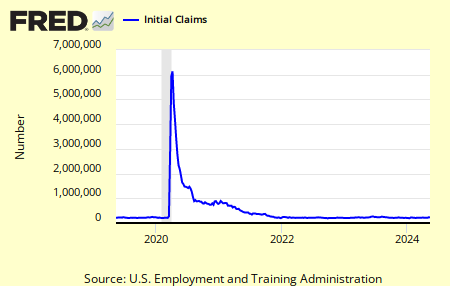

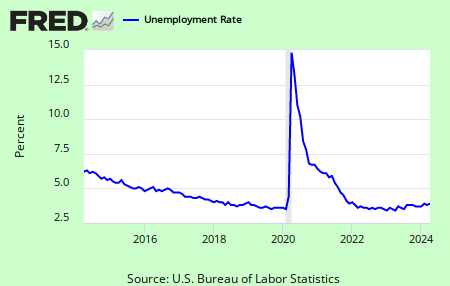
The previous week another popular measure of employment --the civilian unemployment rate--jumped to 9.4 percent from 8.9 percent.
One number that is rarely reported in the popular media is the actual number of people that are unemployed. You might be shocked to learn that the number of unemployed workers soared to 14.5 million in the most recent report. This compares to 13.72 million the previous month, and 8.5 million a year earlier.
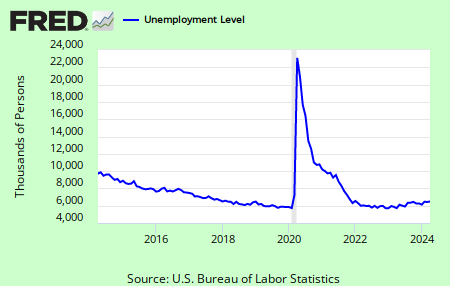
Source: The Employment Situation--Unemployed
While the more popular reports seem to be indicating that the employment situation is improving, the raw numbers show that more and more Americans are out of work. In fact, this is the largest number of unemployed since they started compiling this statistic in 1948.
Another sobering statistic is the number of Americans that have been unemployed for 27 weeks or longer. This number rose to 3.95 million in the latest period, versus 3.68 million a month earlier. In 2008, the number for the comparable period was 1.57 million.

These numbers are particularly disconcerting because many of these Americans have exhausting their Federal and State unemployment insurance benefits.
With the trend of unemployment still rising and the duration of unemployment still rising, the situation is more dire than it appears on the surface.
Many of the so called experts continue to say that the employment situation is improving based on weekly unemployment claims report. The evidence (although lagging) paints a very different picture of employment in America.
Those investing in stocks should take a good hard look at these numbers. The numbers are telling us that the economy is still at risk.
While the employment situation might not be as bad as it was a few months ago, the situation is still very negative.
It is often true that the stock markets discounts all the bad news before it happens. But the question still remains, has the market discounted the worst of the news, or is the worst news still to come?
Subscribe to All American Investor via Email
| Bob DeMarco is a citizen journalist and twenty year Wall Street veteran. Bob has written more than 700 articles with more than 18,000 links to his work on the Internet. Content from All American Investor has been syndicated on Reuters, the Wall Street Journal, Fox News, Pluck, Blog Critics, and a growing list of newspaper websites. Bob is actively seeking syndication and writing assignments. |
More from All American Investor
- Bond Vigilantes Take over in the Long End (Graph)
- Ten Year Treasury Yield in Orbit (Graph)
- Ten Year Interest Rates Rising (Chart)
- Option ARM--The Toxic Mortgage
- Systemic Risk Defined--Too Big to Fail
- Ray Dalio on the current state of affairs in the market
- Roubini Predicts U.S. Losses May Reach $3.6 Trillion
- 60 Minutes -- Cold Fusion
Follow All American Investor on Twitter
Subscribe to:
Posts (Atom)